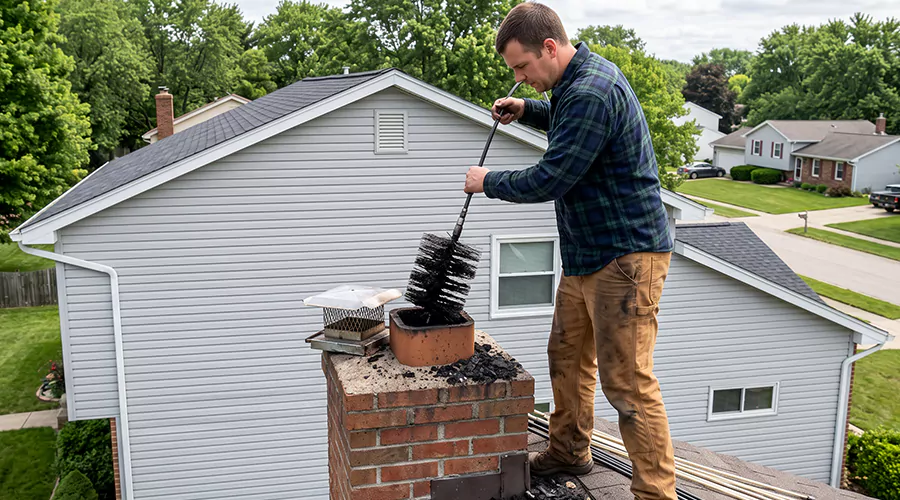
Can You Clean a Chimney Yourself?
Cleaning your own chimney can work for light soot in an accessible flue. Heavy creosote, roof access, or hidden damage makes professional service the safer option.




Based on 500+ Reviews

Proudly American
Owned & Operated

Yes, some homeowners can clean a chimney themselves, especially when dealing with a simple chimney system and light buildup. However, chimney cleaning requires proper tools, safety precautions, and knowledge of chimney components. A DIY chimney cleaning may remove surface soot and minor deposits, but it may not identify hidden problems such as flue damage, structural issues, or dangerous levels of creosote buildup.
Before deciding whether to clean a chimney yourself, it is important to understand the process, required equipment, safety concerns, and situations where professional help may be needed.
During fireplace use, smoke and combustion particles travel through the chimney. Over time, these materials collect inside the flue and create buildup.
Common chimney deposits include:
A dirty chimney may experience:
Cleaning removes these deposits and helps keep the chimney system functioning properly.
DIY chimney cleaning is possible for some homeowners, but it depends on several factors.
A homeowner may be able to clean a chimney when:
However, professional cleaning may be more appropriate when:
Proper equipment is important for effective chimney cleaning.
| Tool | Purpose |
|---|---|
| Chimney brush | Removes soot and deposits |
| Extension rods | Reach deeper sections |
| Protective gloves | Protect hands |
| Safety glasses | Protect eyes |
| Dust mask | Reduce soot exposure |
| Drop cloths | Protect floors |
| Fireplace vacuum | Remove debris |
The brush size should match the chimney flue dimensions. Using the wrong equipment may result in poor cleaning or possible damage.
Before starting, make sure the fireplace has not been used recently. The chimney and fireplace should be completely cool.
Never attempt chimney cleaning while:
Chimney cleaning can create soot and debris.
Before cleaning:
Proper preparation helps prevent soot from spreading throughout the home.
Before brushing the chimney, check visible areas for problems.
Look for:
If major damage is found, cleaning may not be enough. The chimney should be evaluated before further use.
A chimney brush is used to loosen deposits from inside the flue.
The general process includes:
The goal is to remove deposits without damaging the chimney liner. Avoid using excessive force because some chimney liners can be damaged by aggressive cleaning.
After brushing, remove the loosened material from the fireplace.
Debris may include:
Use appropriate cleaning equipment to collect fine soot. Regular household vacuums may not be designed for chimney debris.
While DIY chimney cleaning may seem simple, there are several risks.
Many chimney cleaning methods require accessing the chimney from the roof.
Roof work can be dangerous because of:
Homeowners should avoid roof access if they do not have proper safety equipment or experience.
Cleaning removes deposits, but it does not automatically identify structural problems.
A homeowner may miss:
Professional inspections use specialized equipment to examine areas that are difficult to see.
Using incorrect tools or methods may:
Proper cleaning requires understanding the chimney design and materials.
DIY cleaning may not be the best choice when certain conditions exist.
Avoid DIY cleaning if:
These situations may require professional evaluation before cleaning.
Some cleaning methods allow access from inside the fireplace using extension rods. However, cleaning from only one direction may not provide the same results in every chimney.
Factors affecting cleaning effectiveness include:
The best method depends on the chimney system.
| DIY Chimney Cleaning | Professional Chimney Cleaning |
|---|---|
| Lower upfront cost | Includes specialized experience |
| Requires homeowner effort | Handled with professional equipment |
| May remove basic buildup | Can address heavier deposits |
| Limited inspection ability | Better at identifying problems |
| Safety risks remain with homeowner | Professionals follow safety procedures |
DIY cleaning may work for simple maintenance, but professional cleaning provides additional evaluation and experience.
The cleaning schedule depends on:
Wood-burning fireplaces often require more frequent cleaning because they produce soot and creosote.
A chimney should also be cleaned when:
Yes. An inspection can help identify problems before cleaning begins.
An inspection may reveal:
Cleaning removes buildup, but inspection evaluates the condition of the chimney system.
You can clean a chimney yourself in some situations, especially when the system is simple and buildup is limited. However, safe chimney cleaning requires proper tools, preparation, and awareness of potential risks. DIY cleaning may remove basic soot and debris, but it may not identify hidden problems such as flue damage, structural issues, or serious creosote buildup. For homeowners who choose to clean their own chimney, safety should be the priority. When heavy buildup, damage, or difficult access is involved, professional cleaning and inspection may be the better option.
Yes, some homeowners can clean simple chimney systems with the proper tools and safety precautions.
It can be safe when done correctly, but risks include falls, soot exposure, and missing hidden chimney damage.
Common tools include a chimney brush, extension rods, protective equipment, drop cloths, and proper debris collection tools.
Basic cleaning can remove some deposits, but heavy or glazed creosote may require specialized methods.
Yes. Inspection helps identify damage or problems that cleaning alone will not fix.
Professional cleaning is recommended for heavy buildup, difficult access, chimney damage, or suspected safety problems.
Cleaning your own chimney can work for light soot in an accessible flue. Heavy creosote, roof access, or hidden damage makes professional service the safer option.
